Jul 28, 2025
9 min read
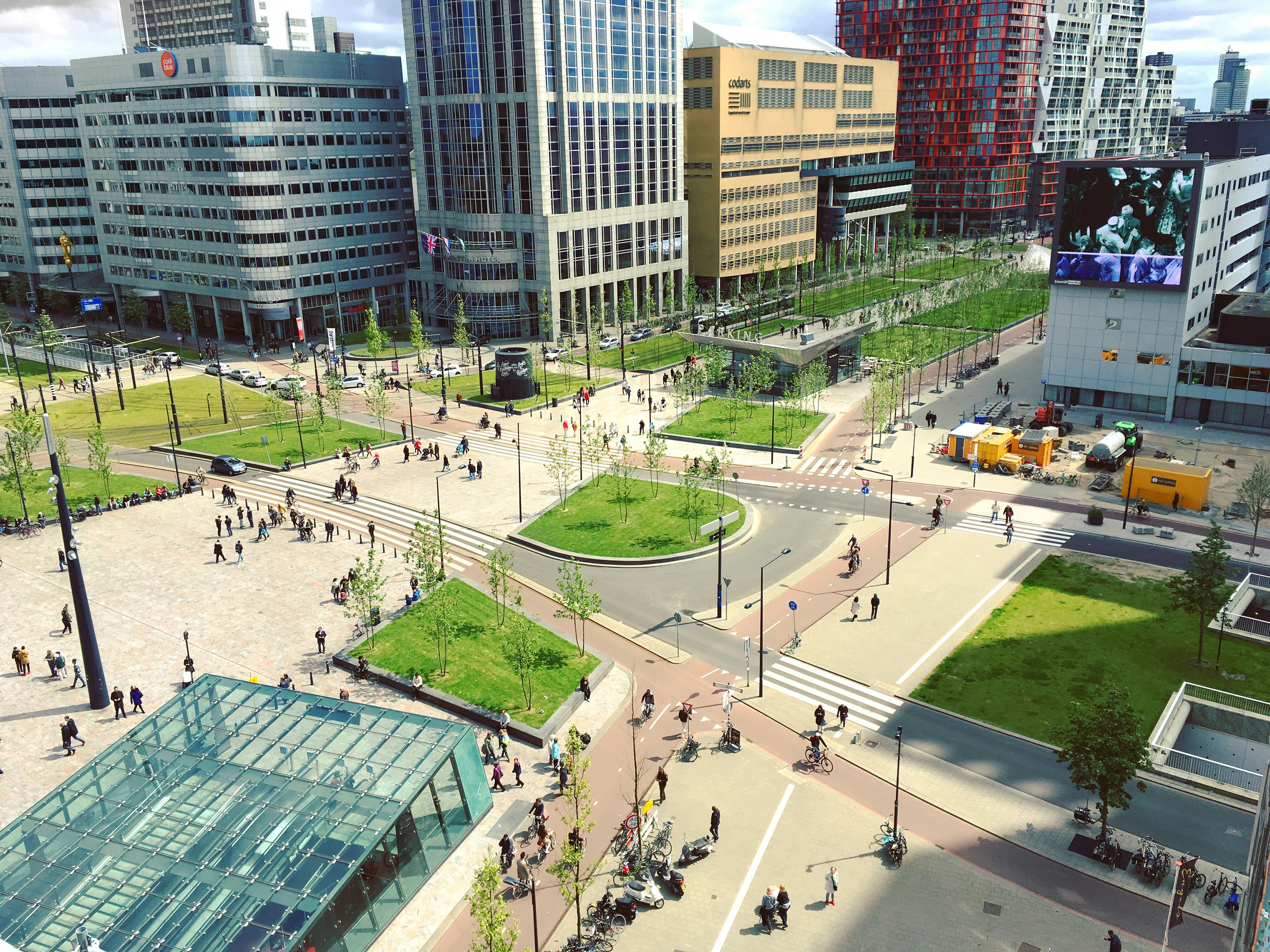
Urban climate challenges do not belong to a single discipline. Flooding, heat stress, air quality, and spatial quality all emerge from interactions between physical systems, human behavior, and governance structures. Yet the way cities are organized often separates these perspectives. Engineers, planners, and policymakers each work with their own tools, language, and priorities, which can make integrated solutions difficult to achieve.
Bridging these disciplines is not just a matter of communication. It requires shared frameworks, common reference points, and tools that support collaboration rather than reinforce silos.
Different Roles, Different Perspectives
Engineers typically focus on technical feasibility, system performance, and safety margins. Their work is grounded in calculations, standards, and physical constraints. Urban planners, by contrast, are concerned with spatial quality, land use, accessibility, and long-term development patterns. Policymakers must balance societal goals, political feasibility, legal frameworks, and budgetary constraints.
Each perspective is valid and necessary, but when they operate independently, decisions risk becoming fragmented. Technical solutions may lack social support, spatial plans may ignore physical limitations, and policies may be disconnected from on-the-ground realities.
The Cost of Fragmentation
When disciplines are not aligned, cities often experience delays, inefficiencies, and unintended consequences. Flood protection measures may be technically sound but poorly integrated into the urban fabric. Green infrastructure projects may deliver local benefits while failing to address systemic risks. Policy goals may be ambitious but difficult to implement due to technical or spatial constraints.
Fragmentation also complicates accountability. When outcomes fall short, it becomes unclear whether the issue lies in design, implementation, or policy direction. This undermines trust and slows down future decision-making.
A Shared Analytical Language
One of the most effective ways to bridge disciplines is through a shared analytical framework. Digital twins provide such a framework by combining spatial data, physical models, and scenario analysis into a single environment.
When engineers, planners, and policymakers work from the same model, discussions become more concrete. Instead of abstract disagreements, stakeholders can explore specific scenarios and see how choices affect outcomes across domains. This creates a common language rooted in spatial evidence rather than disciplinary assumptions.
Supporting Collaboration Through Visualization
Visualization plays a critical role in interdisciplinary collaboration. Maps, scenarios, and spatial indicators help translate technical results into forms that are accessible to non-specialists. At the same time, they retain enough detail to remain meaningful for experts.
By visualizing impacts such as flood extent, heat stress distribution, or the effects of green infrastructure, digital twins allow stakeholders to align their interpretations and priorities. This reduces miscommunication and accelerates consensus-building.
Aligning Short-Term Decisions With Long-Term Goals
Policymakers often face short decision cycles, while planners and engineers work with long-term horizons. This mismatch can create tension, particularly in climate adaptation, where benefits may only become visible over decades.
Integrated modeling helps align these timelines. By showing how short-term actions contribute to long-term resilience, digital twins support decisions that are both politically feasible and strategically sound. This alignment is essential for sustained progress in climate adaptation.
Designing Tools for Real-World Governance
Bridging disciplines also means acknowledging institutional realities. Decision-making processes, regulatory frameworks, and data availability vary widely between cities. Tools that ignore these contexts risk being underused or misunderstood.
At Geo Insights, we design decision-support tools that fit within existing governance structures. This includes tailoring outputs to policy workflows, planning instruments, and stakeholder needs. The goal is not to impose a new way of working, but to strengthen collaboration within current systems.
Toward Integrated Urban Resilience
True urban resilience emerges when technical expertise, spatial planning, and policy direction reinforce each other. Bridging engineers, planners, and policymakers is therefore not an optional enhancement, but a prerequisite for effective climate adaptation.
By providing shared insights and a common foundation for decision-making, Geo Insights helps cities move from fragmented actions to integrated strategies. This collaboration is what ultimately turns data and models into meaningful, lasting impact.